The Evolution of Trust
A playful look at why we cooperate, why we stop and what a second chance can change.
- Game style
- Interactive story
- Controls
- Click / tap
- The pace
- Read & experiment
The Evolution of Trust turns an abstract idea into a series of small decisions. You meet drawn characters, choose whether to cooperate or cheat, and see how different strategies fare when the same players meet again. It is closer to a playable explanation than an arcade challenge: reading and experimenting are equally important.
Its strongest move is letting you make a prediction before showing the outcome. A strategy that seems clever in one encounter may behave quite differently over repeated rounds. Later experiments change the conditions and introduce mistakes. The useful question shifts from “which character wins?” to “what made this result possible?”
Give the explanations a little room. Rushing from button to button misses the connections that make the piece worthwhile. The model is deliberately simplified, so it should prompt questions about cooperation rather than settle an argument about real people. If you like games that leave you with an idea to discuss, this is an inviting place to start.
Controls
- Click or tap the labelled choices to cooperate, cheat or continue.
- Follow the prompts for predictions and tournaments.
- Use the later simulation controls to change conditions and compare outcomes. The sound toggle is separate from the game choices.
Rules
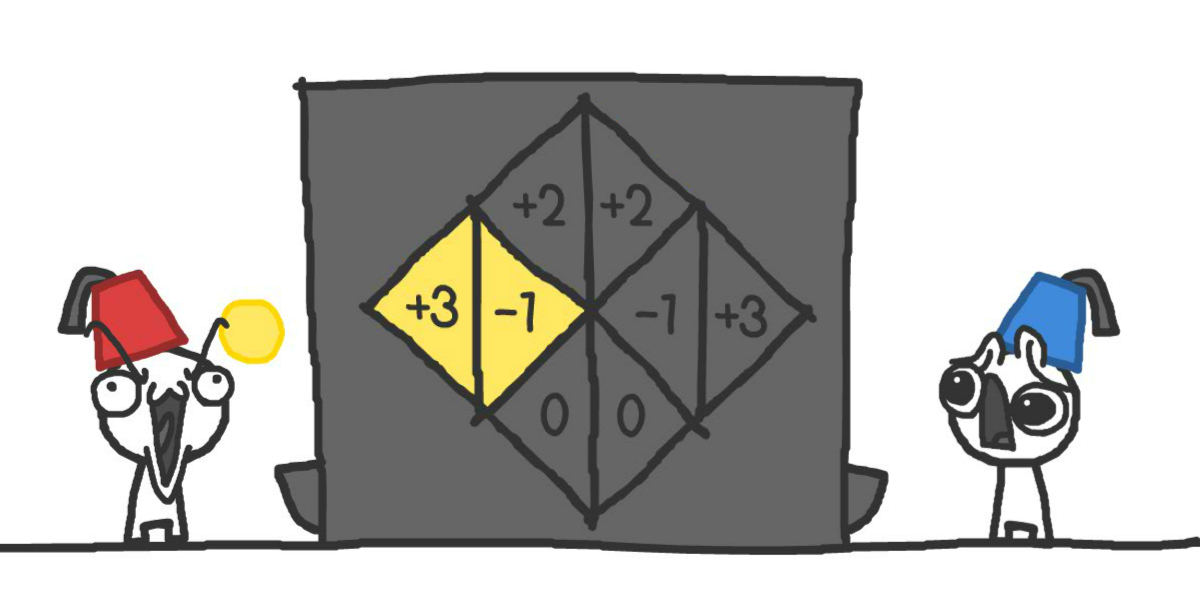
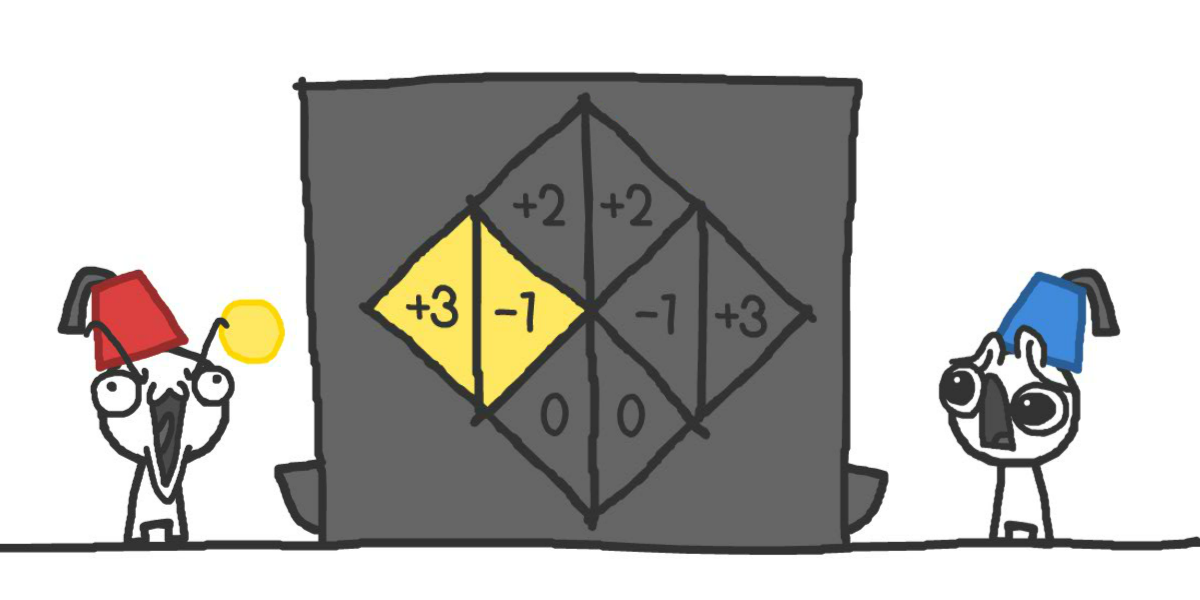
- In the initial exchange, mutual cooperation gives each player two points; mutual cheating gives neither a gain.
- If only one player cooperates, that player loses one point and the other gains three.
- Repeated encounters, the mix of strategies and the chance of mistakes change the results. Points are part of the explanation, not a prize.
Who it suits
Readers who enjoy interactive essays, social dilemmas and experiments with a clear explanation. No prior game-theory knowledge is needed to follow the opening example.
Before you open it
This is a text-rich guided experience. The characters and rules are a model of cooperation, not a test of your personality or a complete account of human behaviour.
Browser & device notes
The official browser edition uses JavaScript and graphical interactive scenes. Clickable controls suit a pointer or touch input; small screens may make the explanatory text less comfortable. A complete keyboard or screen-reader route has not been verified.
Open the official edition
You are leaving DiamondMorrow. The official edition is hosted by Nicky Case. Translation and credit links can lead to other sites with their own practices.
Play The Evolution of TrustSources & preview
Review by DiamondMorrow, based on official sources and limited desktop checks. Updated 4 November 2026. Game by Nicky Case. Image credits are in the caption; source and licence links are below.